
When the Storm Begins Within.
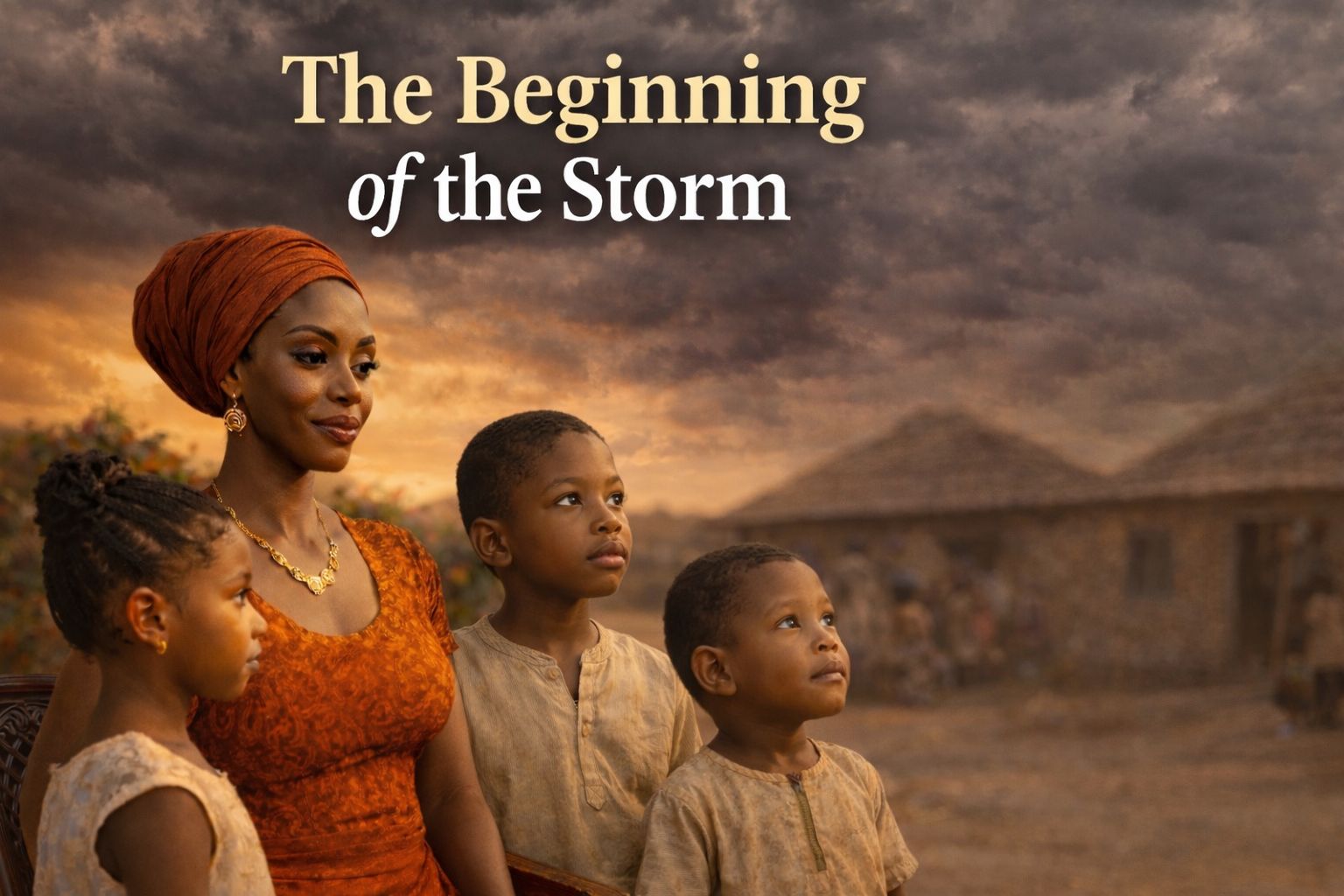
Every storm has a season before it breaks. At first, the sky is only slightly overcast — barely noticeable. The winds whisper rather than howl. But beneath the quiet surface, forces are gathering and yes, gathering unnoticed, unless you possess the rare life proboscis to dictate the hidden dangling Damocles. So it is with families, with communities, and with the human heart.
Imagine, yes, imagine. Two households once stood side by side, bound not merely by proximity but by blood and shared history. Time blessed them with children, and in those children lay the seeds of two distinct philosophies of life. In one home, the guiding lesson was simple yet profound: a person's worth is intrinsic. It is not borrowed from wealth, nor purchased by status. It is revealed in kindness, humility, and respect for others. Recognising this can inspire one to reflect on the influence of their own family values on society.
Children do not invent their world-view — they inherit it. The family is the first Ideological State Apparatus, using Louis Althusser's term; the first school of sociology, the first institution where hierarchy, identity, and belonging are taught. What they observe becomes their moral compass. When children are instructed — explicitly or subtly —that dignity correlates with status, they learn to rank others before they learn to understand them. Social stratification becomes not merely a structure of society, but a habit of the mind, the definition and classification of the society.
In many communities, wealth functions as both currency and curtain. It buys comfort, yes, but it also obscures common humanity. The affluent child may come to see poverty not as a circumstance but as a character. The less privileged child, in turn, confronts not only material limitations but also social exclusion. Mockery and alienation are not accidental; they are learned behaviours, reflections of adult anxieties projected onto young hearts.
This is how storms begin — not with thunder, but with comparison. Yes, the comparison we created to fit the purpose and intentions.
Comparison is one of society's most powerful forces. It constructs invisible walls and ladders, inviting some to climb and compelling others to feel small. Yet philosophically, comparison is a fragile measure of worth. The human person is not a commodity; dignity is not a market-driven asset. Existential thinkers remind us that meaning is forged through choices, not possessions. Sociologists, too, observe that rigid hierarchies erode communal bonds. When families fracture along lines of status, the wider community absorbs the tension.
Then comes change — often in the form of opportunity. Migration, new employment, the promise of a "better future." Movement reshapes perception and identity. When individuals leave familiar landscapes, they confront the question: Who am I without the labels my village gave me? Yes, without the definition from others. In this way, geographical distance can become a form of psychological liberation. It offers relief not only from economic constraints but also from social definition.
But storms are not only external. When one household finds itself standing alone, vulnerability and ambition may collide. Isolation can awaken either compassion or calculation. Human beings, when faced with another's solitude, reveal their deepest philosophy. Do they extend solidarity, or do they exploit weakness? Do they create victims, or do they inadvertently forge warriors? Every day we are confronted with opportunities and choices; the choices we make define who we are and what we will become. It equally defines how others will define us.
The distinction between victim and warrior is not determined solely by circumstance. It is shaped by interpretation. Sociologically, adversity can either reinforce marginalisation or catalyse resilience. Communities often underestimate the transformative power of hardship. Exclusion, while painful, can cultivate inner strength, empathy, and self-definition independent of social approval. The child who is mocked for lacking wealth may, in time, develop a moral wealth that no currency can rival or buy. Hence, as much as our situation can define us, we can equally be defined. The power to define who we are is in our hands.
That raises an enduring question: What is the true measure of success? If prosperity breeds arrogance, is it prosperity at all? If struggle breeds character, is it misfortune — or preparation?
The storm, when it finally breaks, tests foundations. Houses built on comparison tremble; those built on humility endure. Social superiority is a fragile shelter against the winds of change. History repeatedly demonstrates that power is transient, but character has generational endurance. The values instilled in childhood echo far beyond the walls of a single home. They shape marriages, friendships, workplaces, and civic life. Our choice of values defines who and what we are, encouraging us to see resilience and humility as vital qualities.
In the broader fabric of society, families serve as microcosms. What unfolds within them mirrors national and global realities: class tension, mobility, resentment, and aspiration. When status becomes the central narrative, division multiplies. When dignity becomes the foundation, solidarity grows. Recognising this can inspire us to value community-building based on shared worth rather than hierarchy.
Thus, the true storm is not rivalry between households. It is the quiet conflict between two world-views — one that sees humanity through the lens of hierarchy, and another through the lens of inherent worth. Two opposing world-views, one would argue.
And storms, though feared, have a peculiar gift: they reveal what cannot be seen in calm weather. They strip away illusion. They expose roots. They test whether we have built our identities on shifting sand or on something deeper and more enduring.
In the end, the question is not whether adversity will come. It always does. The question is how we will handle it and what it will uncover. Will it expose insecurity masked as superiority? Or will it uncover resilience shaped by humility?
For every family, every community, and every individual, the gathering clouds present the same choice. One can use power to diminish others, or one can use hardship to discover strength. One can measure life by status or by substance.
And when the storm finally passes — as all storms do — it is the foundation built on humility and inherent worth, not the tallest house, that shapes a resilient future.